Research & Resources
Health and wellness are no longer niche industries — they’re becoming the future of how people live.
The global wellness market now exceeds $1.5 trillion and continues to grow at an estimated 5–10% annually.
Wellness tourism alone has grown into a USD $438.6 billion global market.
The broader global health, wellness, and fitness industries generate more than $7.2 trillion in annual sales worldwide.
People are becoming more intentional about:
Preventative Health
Recovery and Restoration
Performance Optimization
Longevity and Healthy Aging
But with more options than ever before, consumers keep asking one simple question: What actually works?
That question inspired our model. Explore the research below and decide for yourself — then come try it in person.
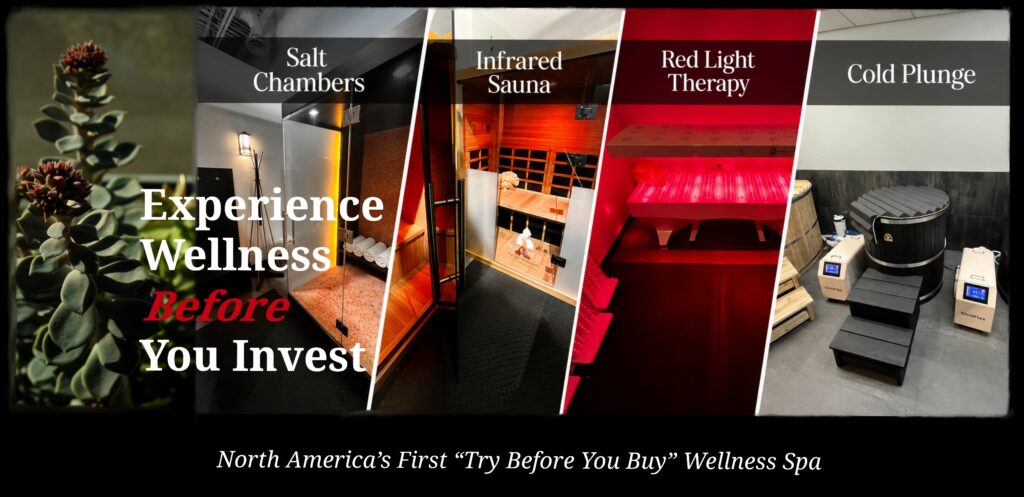
Red Light
- Acne Vulgaris: Photobiomodulation lowers inflammation and targets C. acnes bacteria. Clinical data summarized by the Stanford Medicine News Center shows that combining superficial red light with topical treatments can successfully destroy target damaged cells and clear breakouts.
- Muscle Recovery & Performance: Light applied both before and after exercise reduces Delayed Onset Muscle Soreness (DOMS). A comprehensive literature review published in PubMed Central (PMC) establishes that near-infrared wavelengths penetrate 2 to 5 centimeters deep into major muscle groups to accelerate tissue repair and boost ATP production.
- Arthritis & Joint Pain: To treat deep joint capsules and ease chronic inflammation, deeper tissue penetration is required. A clinical analysis hosted by NCBI PMC highlights how near-infrared light downregulates pro-inflammatory cytokines to provide significant pain relief.
- Skin Rejuvenation & Aging: Review the peer-reviewed LED photorejuvenation data in the National Center for Biotechnology Information to see how wavelengths from 633nm to 830nm improve skin complexion and elasticity. [1]
- General Skin Benefits: Check out the American Academy of Dermatology summary of in-office treatments showing softer skin and less redness. [1]
- Wound Healing & Pain: Read the Integris Health overview of how red and infrared lights enhance cell proliferation and expedite tissue repair. [1, 2, 3, 4]
- Neurological Research: Review Parkinson Canada to explore pilot studies suggesting safety and improved motor function with extended PBM use.
Other Red Light Resources:
https://health.selfdecode.com/blog/red-light-therapy-benefits
https://pubmed.ncbi.nlm.nih.gov/25865533
https://pubmed.ncbi.nlm.nih.gov/29665018
Saunas
Scientific Databases: You can explore comprehensive medical reviews regarding infrared sauna therapy on the U.S. National Library of Medicine or read a specific randomized trial evaluating infrared’s impact on muscle recovery in the National Center for Biotechnology Information.
Medical Institutions: The Mayo Clinic provides expert answers outlining the studied effects of infrared saunas on conditions like high blood pressure and type 2 diabetes. Similarly, the Cleveland Clinic details how infrared heat mimics the physical response of a moderate walk. [1, 2, 3, 4]
- Pain Reduction: In randomized clinical trials—specifically utilizing Japanese Waon therapy protocols—patients with fibromyalgia experienced a 57% reduction in pain scores. [1]
- Musculoskeletal Relief: Studies indicate that direct infrared heat exposure dampens central pain sensitization pathways, easing localized tension from osteoarthritis, rheumatoid arthritis, and chronic low back pain. [1]
- Fatigue and Sleep: Patients utilizing thermal therapy showed significant improvements in physical function and sleep quality, breaking the chronic cycle of sleep-deprivation-induced pain. [1, 2]
- Vascular Health: Research evaluates infrared heat as a form of passive cardiovascular conditioning. The resulting sweating and vasodilation mimic the physiological demands of a moderate-paced walk.[1, 2]
- Heart Failure & Circulation: Clinical evidence demonstrates that regular sessions improve blood vessel lining performance (vascular endothelial function), help regulate blood pressure, and reduce systemic cardiac workload for those with congestive heart failure. [, 2]
- Type 2 Diabetes: Early clinical findings outlined by the Mayo Clinic suggest that thermal therapy helps mitigate associated lifestyle complications by enhancing full-body blood circulation. [1, 2]
- Muscle Damage: Studies tracking athlete recovery indicate that deep tissue penetration aids in clearing metabolic waste, reducing the severity of delayed onset muscle soreness (DOMS) after intense physical strain. [1, 2]
Salt Chambers
Clinical Study Databases
- Global Wellness Institute Halotherapy Guide: Offers a research overview, expert analysis, and a clinical spotlight on salt-infused vapor studies for conditions like cystic fibrosis and asthma. [1, 2]
- Salt Therapy Association Research Page: Features a comprehensive library of downloadable PDFs, pilot studies, and clinical surveys evaluating the impact of salt aerosols on COPD, athletic capacity, and respiratory health. [1]
- Halotherapy Solutions Research Directory: An organized breakdown of medical articles, studies, and European data focused on dermatology, allergies, and lung function.
Peer-Reviewed Clinical Literature
- PubMed Central (PMC) – Asthma & Respiratory Surveys: A 2014 study detailing the therapeutic effects of artificial salt-mine environments on chronic infectious-inflammatory and allergic respiratory diseases.
- PubMed Central (PMC) – COPD Pilot Study: A medical review examining the inhalation of micronized dry salt within a halotherapy chamber for Chronic Obstructive Pulmonary Disease (COPD).
Cold Plunge
Key Meta-Analyses & Reviews
- Broad Health & Wellbeing: Review the comprehensive systematic review published on PLOS One analyzing 11 studies and 3,100+ participants. [1, 2]
- Brain & Mood Connectivity: Read the PubMed Central study on how short-term whole-body immersion alters brain connectivity and boosts positive emotions.
- General Clinical Review: View the PubMed Central summary evaluating the untapped potential of cold therapy on cardiometabolic risk and physical wellbeing.
Athletic Recovery & Cellular Benefits
- Cellular Adaptations: Read about the cellular-level protection mechanism in the uOttawa Faculty of Health Sciences report on cold acclimation.
- Muscle Soreness: Check out the Mayo Clinic Health System guide covering how cold constriction reduces inflammation and soreness.
- Performance Protocols: Review the Huberman Lab science-based protocols for deliberate cooling and athletic recovery. [1, 2, 3, 4]
- Protocol: 810nm–850nm, 30–50 J/cm². [1, 3]